
What the reefs look like
Most of our dive sites are volcanic rock reefs with walls and sandy gullies, usually between about 7 m and 25 m deep, with deeper sites further out. This is temperate reef diving, not a tropical coral garden. What you get instead is texture and colour: every surface is covered in something growing.
On Namakwa Reef, the colour reminded us of the Namaqualand flowers, with pink growth everywhere and blue and orange sea squirts. At Seal Point Reef off Cape St. Francis, the red bait grows so big you have to see it to believe it.
The big animals
Ragged-tooth sharks
Raggies are the star of many Eastern Cape dives. The region is an important nursery area for them, and pregnant females give birth here between September and November, according to the Oceanographic Research Institute. On our reefs we've seen groups of 2 to 2.5 m raggies resting in gullies at Raggies Rest, and juveniles hiding at Liza's Raggie.
Catsharks
Pyjama sharks and leopard catsharks are small, beautifully patterned sharks that often rest under ledges. They're harmless and great for photos.
Rays
Large rays are seen on sites such as Jagged Edge and Rock Cod, often gliding over the sandy gullies.
Other sharks
We've also had visits from small hammerheads and a gully shark on Walls. Sightings like these are a bonus, not a promise.
Fish life
- Yellowbelly rock cod: Rock Cod reef is named after them, and they hide in the crevices.
- Red bait and reef fish: shoals of reef fish move through the gullies on most dives.
- Bigger fish on deeper reefs: large "Miss Lucy" (red stumpnose) and musselcracker have been spotted at Geelbek Rock, geelbek hunt over the sandy patches at Pramberg Reef, and schools of Cape salmon have been found at Shark Point Pinnacle.
- Others we've logged: double-sash butterflyfish, puffer fish, choir boys and a school of halfbeaks.
The small stuff
If you like macro, Jeffreys Bay is a treat. Look out for:
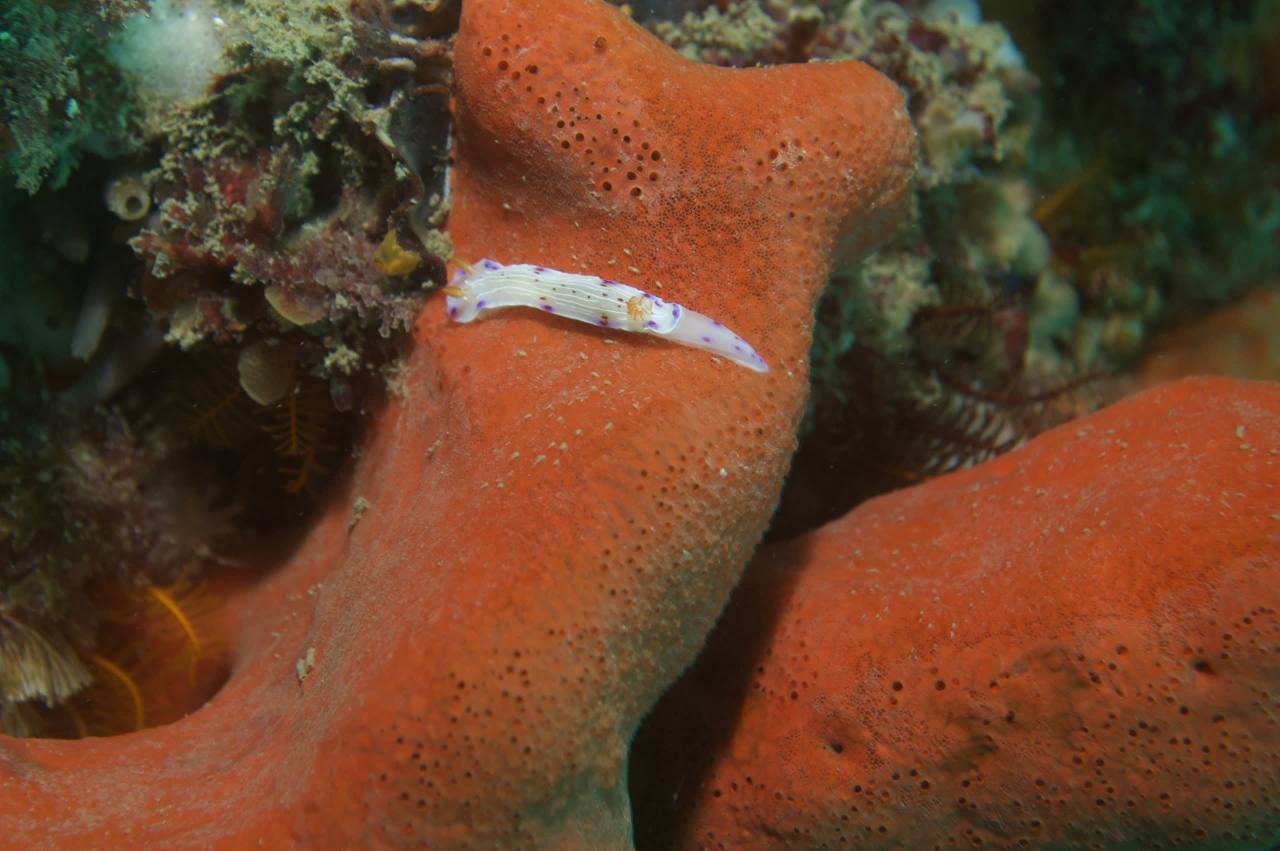
- Nudibranchs and flatworms, including ones we've never seen before
- Cuttlefish, which change colour as they watch you
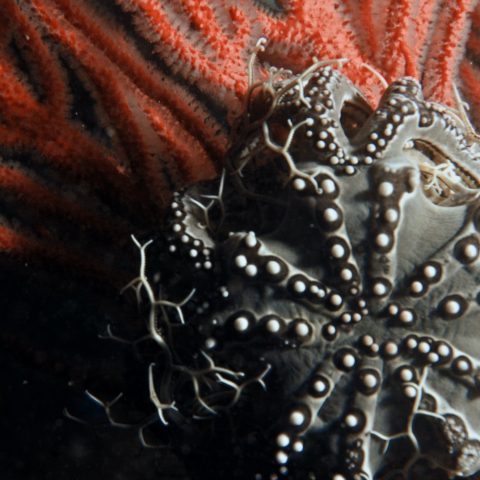
- Basket stars and brittle stars, some huge, at Moonrock and Pramberg
- Anemones, sponges, sea squirts and sea ferns
- Mermaid's purses (shark and ray egg cases)
What you might see from the boat
On the way to and from the dive site, keep your eyes open. On our ocean safaris we sometimes spot dolphins, whales, penguins, seals and Cape clawless otters, and we've had dolphins greet us just after the launch on dive days. This all depends on what the wildlife is doing that day.
Respecting what we see
Most of what makes our reefs special is slow-growing and fragile. Please:
- keep your fins off the reef and your hands to yourself,
- never chase or touch animals, and
- leave everything where you found it.
Good buoyancy is the best gift you can give the reef. If yours is rusty, a RAID Reboot refresher is a great place to start.
Come and explore
Want to see it for yourself? Browse all our dive sites, read recent dive logs, then WhatsApp or call Paul on 083 521 5093 to book a dive.