
Why you get cold underwater
Water conducts heat away from your body many times faster than air at the same temperature. On top of that, the air you breathe from a cylinder is dry and cool, and you're often fairly still underwater. So a 17°C dive can feel much colder than a 17°C day.
How cold is the water in Jeffreys Bay?
Long-term averages from public sea-temperature data put Jeffreys Bay's surface water at roughly 20 to 22°C in late summer and 17 to 19°C in late winter. The bottom can be cooler. On 28 October 2026, our bottom temperatures were 16°C at Walls and 17°C at JAG. On a good summer day we've logged 22°C at the bottom.
There's also a catch: in summer, easterly winds can cause upwelling, which brings cold water up from the deep. Water can drop from around 21°C to as low as 12°C during these events. So even in summer, it's worth being prepared.
Choose the right wetsuit
Thickness
For local diving, a 5 mm suit is what we dive in year-round. When it gets cold, we go two-piece or add a chicken vest or a hooded vest. A 3 mm suit is usually too thin here except on the warmest days.
Fit
Fit matters as much as thickness. A wetsuit keeps you warm by trapping a thin layer of water against your skin, which your body heats up. If the suit is loose, cold water keeps flushing through. It should be snug everywhere, with no gaps at the neck, wrists or ankles.
Layering
Hooded vests and shorties can be worn under or over a suit for extra warmth. A one-piece suit plus a hooded vest is a popular combination in cooler water.
Don't forget your head, hands and feet
- Hood: an uncovered head and neck lose heat quickly, and cold water down the neck is miserable. A hood is one of the cheapest ways to feel warmer.
- Gloves: they keep your fingers working, which matters for handling equipment.
- Boots: they keep your feet warm and protect them on the beach and the boat.
You can browse hoods and headwear, gloves and wetsuits and exposure protection in our shop.
Before the dive
- Eat a proper breakfast. Your body needs fuel to make heat.
- Stay hydrated. It helps your circulation.
- Avoid alcohol the night before. It affects your body's ability to regulate temperature.
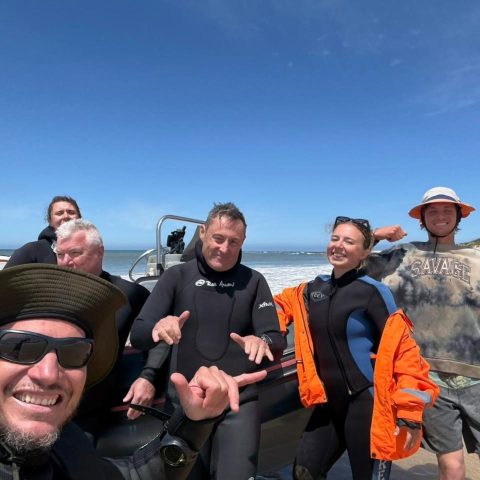
- Keep warm on the boat ride out. A windproof jacket and beanie make a big difference.
During the dive
- Move gently and steadily. Light, steady finning helps, but don't overexert yourself.
- Watch your time. If you're shivering, tell your buddy or guide and end the dive. Shivering is your body's warning sign.
- Don't push through. Being cold makes you tired, clumsy and anxious.
Between and after dives
- Get out of the wind. Wind chill on a wet body is brutal.
- Cover up. Pull on a jacket or a boat coat over your suit during surface intervals.
- Drink something warm if you can.
- Change quickly into dry clothes once you're back on the beach.
Signs you're getting too cold
Shivering, numb fingers, confusion or clumsiness are signs to end the dive and warm up. Take them seriously.
Rent or buy?
Our rental includes wetsuits, and it's R50 per item at the time of writing. If you dive often, a suit that fits you perfectly is one of the best investments you can make for comfort.
Ready to dive, warmly?
WhatsApp or call Paul on 083 521 5093 for advice on what to wear for the conditions this week, or visit the J-Bay SCUBA shop to kit yourself out.