
Which sharks live on Jeffreys Bay reefs?
These are sharks we and our divers have recorded on our local reefs over the years:
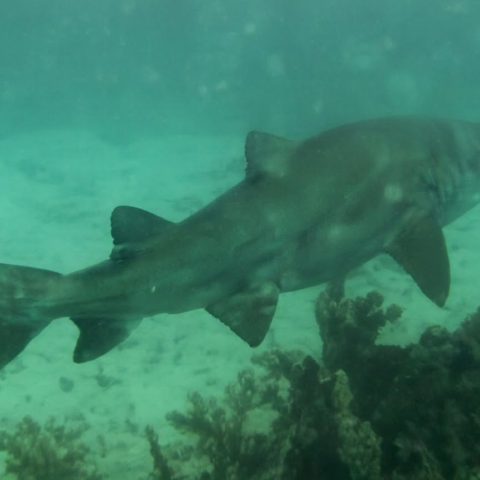
- Ragged-tooth sharks (raggies). Big, bulky and toothy-looking, but known for being docile. They tend to rest in gullies by day. At Raggies Rest we've seen groups of 2 to 2.5 m raggies lying in the gullies, and juveniles hide in the gullies at Liza's Raggie.
- Pyjama sharks and leopard catsharks. Small, striped or spotted sharks that often lie still under ledges. Our divers have spotted them at sites like Discovery Channel, Moonrock Reef and Pope's Nose, and they pose no threat to divers.
- Gully sharks and small hammerheads. On one March dive at Walls, our divers had a visit from small hammerhead sharks and a gully shark.
Great white sharks occur along this coast, but encounters while SCUBA diving are rare. On our dive site notes for Geelbek Rock, we record one great white seen during a descent to 30 m over more than a decade of diving here. We mention it because we'd rather be honest than pretend they don't exist.
When are raggies around?
The Eastern Cape is an important nursery area for ragged-tooth sharks. According to the Oceanographic Research Institute, pregnant females travel north to warmer KwaZulu-Natal waters for the first part of their pregnancy, then move south from about June to give birth in Eastern and Western Cape waters between September and November. Research in nearby Algoa Bay found raggies spend more time at their reef aggregation sites in summer and autumn. Juveniles stay in their nursery areas for their first few years.
So there's a decent chance of raggies on our reefs in the warmer months, but wildlife doesn't follow a timetable.
Are sharks dangerous to divers?
The species we usually see aren't interested in divers. Raggies have a fearsome set of teeth, but they're known for being sluggish and docile, resting quietly during the day. Catsharks are small bottom-dwellers.
What keeps it that way is good diver behaviour:
- Stay calm and move slowly. Sharks are relaxed around divers who are relaxed.
- Keep your distance. Never block a shark's path out of a gully.
- Don't touch, feed or chase. Let the animal decide how close it comes.
- Stay with your group. Follow your guide's lead and signals.
What if I'm nervous about sharks?
That's very common, and we'll talk you through it in the briefing. Many nervous divers say seeing a raggie up close changed how they feel about sharks for good. If you'd rather avoid them completely, tell us. We choose sites on the day based on conditions, and you can always signal to move on.
What else will I see?
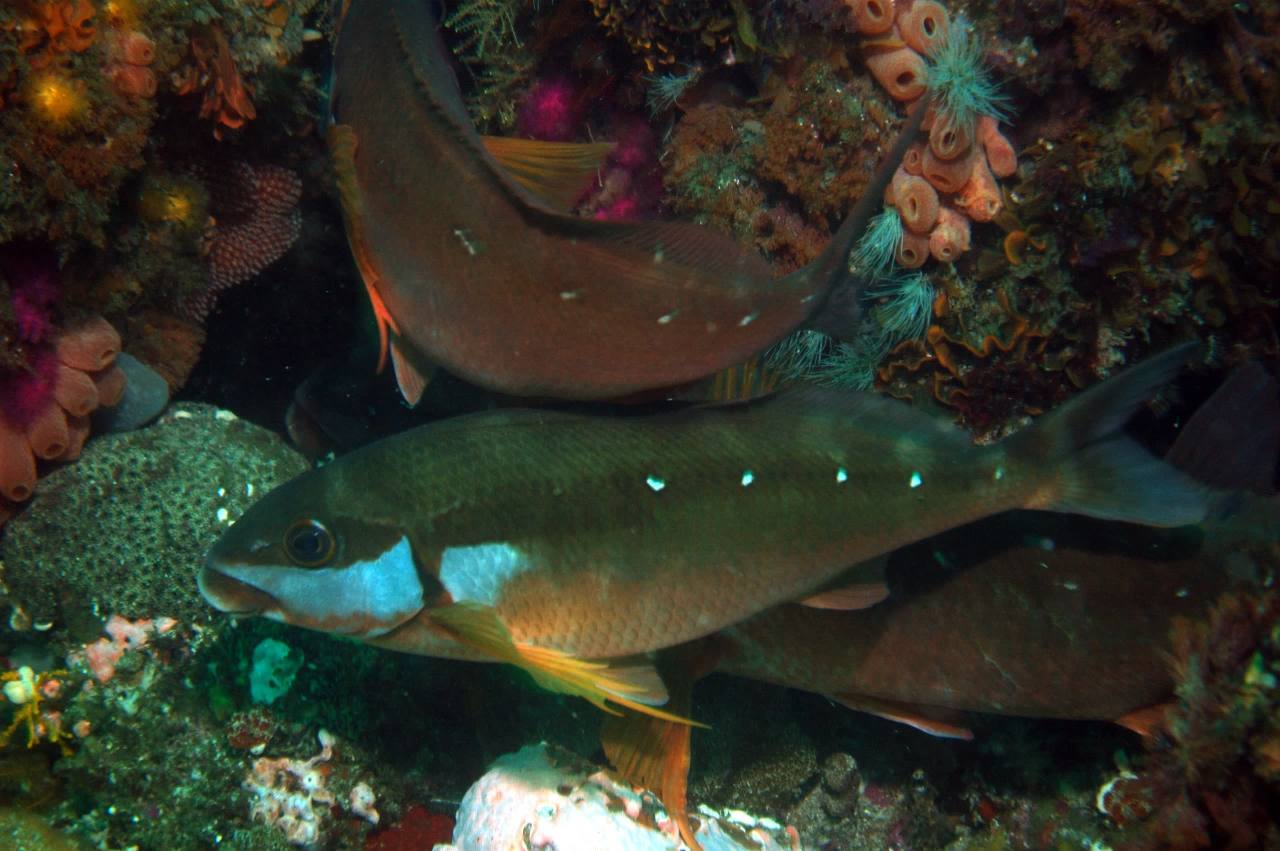
Sharks are only part of the story. Our reefs are rocky walls and sandy gullies covered with sponges, anemones, hard and soft corals, and nudibranchs, with rays, yellowbelly rock cod and cuttlefish regularly spotted. See more on our dive sites page.
Come and see for yourself
If seeing a raggie is on your bucket list, the warmer months are a good time to try. WhatsApp or call Paul on 083 521 5093 to book a dive. Not certified yet? Start with a Try Dive or the RAID Open Water course.