Why a first dive is lower risk than people think
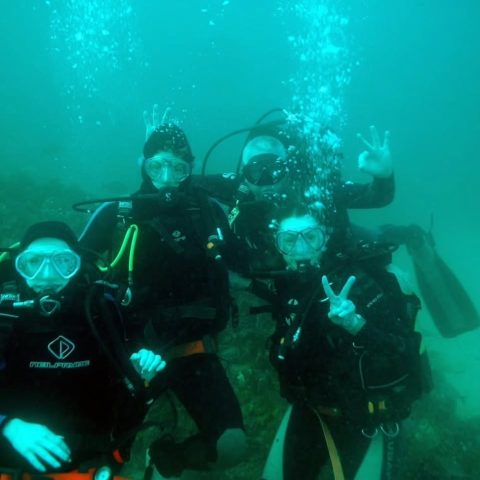
On a first dive, you are never "on your own". With a RAID Try Dive, the instructor supervises you directly for the whole experience. You don't plan the dive, you don't choose the depth, and you don't navigate. Your job is to breathe slowly, relax and enjoy it.
The depth limits are also deliberately shallow. RAID standards keep a confined (pool) Try Dive to a maximum of 5 m, and an open-water Try Dive to a maximum of 12 m. You can read the full breakdown on our Try Dive page.
The safety steps before you get wet
Before any in-water session, every student completes online registration that includes:
- a medical questionnaire,
- a liability release, and
- a safe-diving statement.
The medical questionnaire matters. Some conditions (certain heart, lung or ear problems, for example) need a doctor's sign-off before you dive. If you answer "yes" to anything on the form, we'll ask you to see a doctor, ideally one familiar with dive medicine, before your session. It's not red tape; it's the single most useful safety check in the whole process.
You'll also do a short online quiz or flipbook so you understand the basics: how to breathe, how to clear your ears, and what the hand signals mean.
Pool first, ocean second
Every first-timer starts in confined water. In the pool you learn to:
- breathe from the regulator calmly,
- clear a little water from your mask,
- recover your regulator if it comes out of your mouth, and
- equalise your ears as you go down.
Only once you're comfortable do we take you into the sea. If you'd rather stay in the pool the first time, that's fine too. A pool-only Try Dive is a complete experience on its own.
How the ocean side is kept safe in J-Bay
Most of our dive sites are inside the bay, between Shark Point and the Gamtoos River mouth, but conditions still change with the swell and wind, so we take the weather seriously. We launch through the surf from Jeffreys Bay Main Beach (and seasonally from Port St. Francis), and we only go when the sea, swell and wind line up. You can see how we judge conditions on our dive forecast.
Paul, who runs J-Bay SCUBA, spent 12 years as an NSRI Coxswain and volunteer at the local Sea Rescue station, and our skippers are rescue trained. The boat takes a maximum of six passengers plus the skipper, so groups stay small and easy to watch.
For a first ocean dive, we choose a shallow, sheltered reef suited to the day. Many of our reefs, such as Walls, have a bottom around 16 m with walls rising to about 7 m, so an instructor can easily keep a beginner well within the 12 m Try Dive limit.
What actually goes wrong (and how we prevent it)
The most common issues for beginners are small ones:
- Ear discomfort from not equalising early enough. We teach you to equalise early and often, and to signal if it hurts so we can stop and go up a little.
- Nervousness at the start. That's normal. We take it slowly, stay at the surface until you're ready, and you can end the dive at any time.
- Seasickness on the boat. If you're prone to it, take a motion sickness tablet the night before and the morning of the dive.
Serious incidents in recreational diving are uncommon, and they're even less likely when an instructor controls the depth, the time and the conditions.
Who should wait or check first
Talk to a doctor before booking if you:
- are pregnant,
- have asthma, epilepsy, diabetes, heart or lung conditions,
- have had recent surgery or ear problems, or
- take regular medication.
Be honest on the medical form. If you're unsure, ask us and we'll point you in the right direction.
Ready for your first breath underwater?
If you've been curious but nervous, a Try Dive is the safest way to find out whether diving is for you. You'll be with a RAID instructor the whole time, in small groups, with a team that knows these reefs and this bay well.
WhatsApp or call Paul on 083 521 5093 to book a Try Dive or ask any questions. When you're ready for more, our RAID courses take you all the way from Open Water upwards.